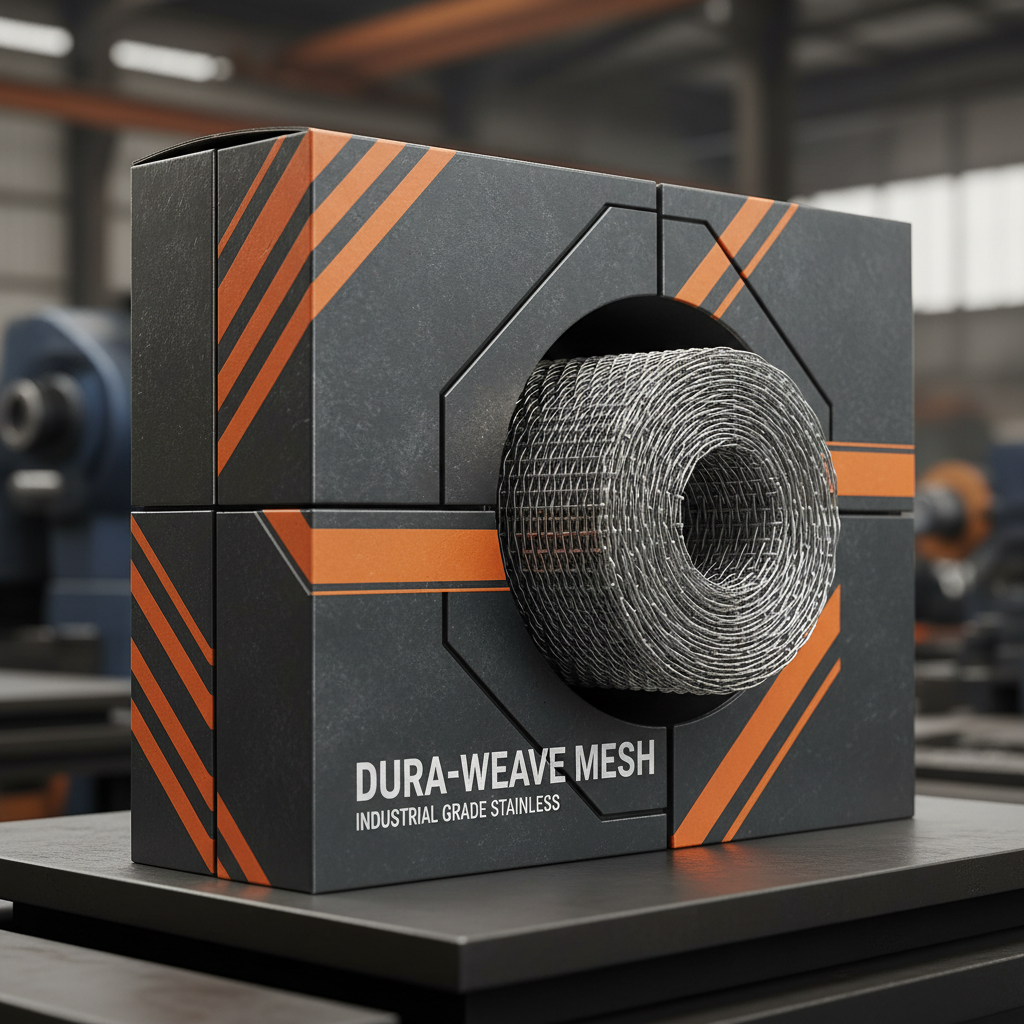
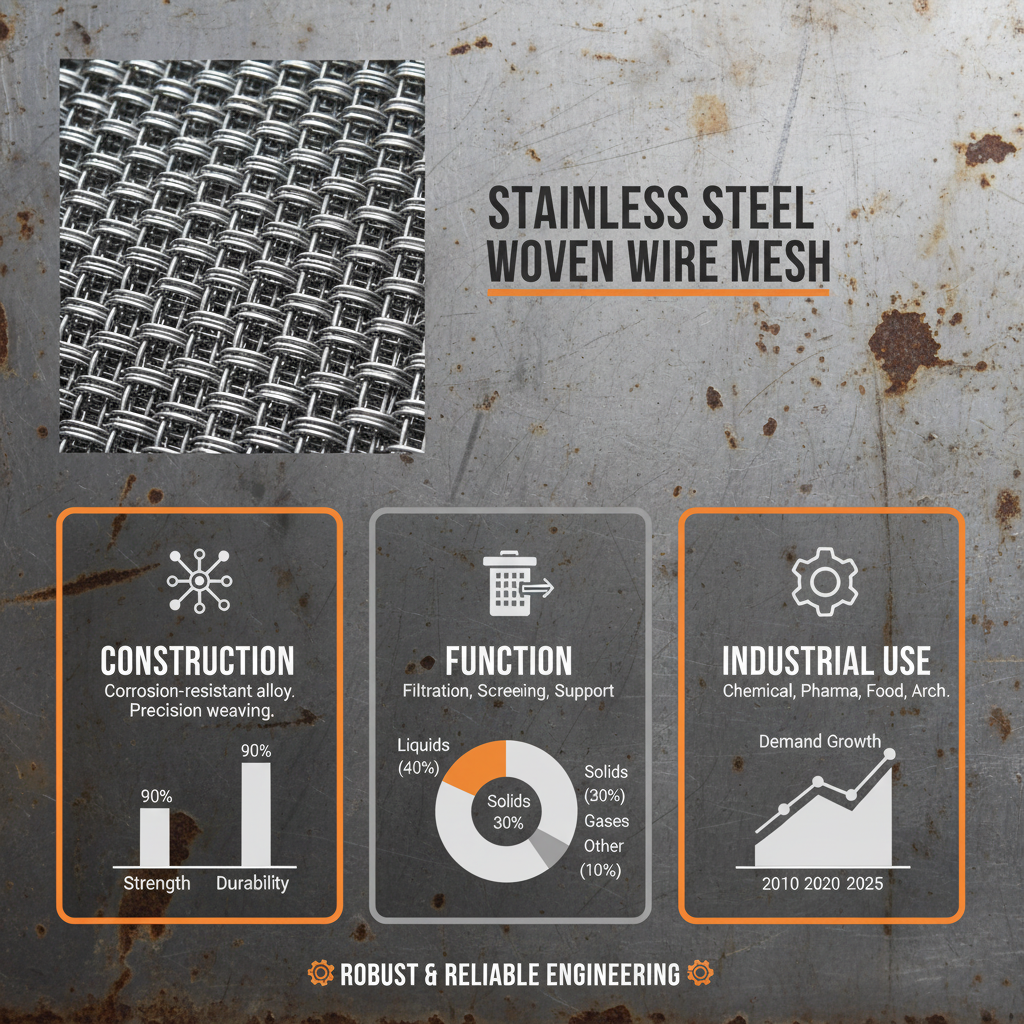
In the demanding landscape of modern industrial filtration and structural reinforcement, stainless steel woven wire mesh stands as a cornerstone of material engineering. By intertwining high-grade stainless steel wires in precise patterns, manufacturers create a versatile medium that balances openness with incredible strength, ensuring that critical processes—from chemical refining to food processing—operate without failure.
The global demand for high-performance mesh has surged as industries shift toward materials that can withstand extreme temperatures and corrosive environments. Understanding the nuances of weave types, alloy compositions, and micron-level precision is no longer just for engineers; it is a strategic necessity for businesses aiming to reduce downtime and enhance the safety of their operational environments.
Whether it is used for high-precision laboratory sieving or heavy-duty architectural cladding, the integration of stainless steel woven wire mesh provides a long-term value proposition based on durability and reliability. This guide explores the technical depth and practical applications of this essential industrial component, offering insights into how the right mesh selection can optimize efficiency and sustainability.
The Global Industry Context of Stainless Steel Woven Wire Mesh
On a global scale, the adoption of stainless steel woven wire mesh is intricately linked to the growth of the pharmaceutical, aerospace, and petrochemical sectors. With ISO standards governing the precision of aperture sizes and tensile strength, the industry has evolved from simple screening to the production of micron-level filters. This transition is driven by the need for higher purity in chemical processing and more stringent safety protocols in industrial manufacturing.
However, many enterprises still struggle with material fatigue and premature corrosion in aggressive environments. The challenge lies in selecting the correct alloy—such as 304, 316, or exotic alloys—to match the specific chemical exposure of the site. By addressing these challenges through advanced metallurgical engineering, the industry ensures that critical infrastructure remains intact, reducing the risk of catastrophic leaks or filtration failures in high-pressure systems.
Defining the Technical Essence of Woven Mesh
At its core, stainless steel woven wire mesh is a fabricated textile made of metal wires interlaced at right angles. Unlike welded mesh, where the joints are fused, woven mesh relies on the mechanical interlocking of wires. This allows for a degree of flexibility and the ability to create incredibly fine apertures, making it indispensable for separation, filtration, and protective screening.
In modern industry, this material serves as a critical barrier that allows specific particles or fluids to pass through while blocking contaminants. From a humanitarian perspective, such mesh is often used in water purification systems in remote areas, providing a durable and washable primary filtration layer that significantly improves public health outcomes by removing large-scale debris and organic matter.
The technical meaning of "woven" extends to various patterns, such as plain, twill, and dutch weaves. Each pattern alters the "open area" percentage and the structural rigidity of the mesh. This versatility ensures that whether a project requires a transparent architectural facade or a high-pressure oil filter, there is a specific weaving configuration designed to meet those exact mechanical demands.
Core Components Driving Mesh Performance
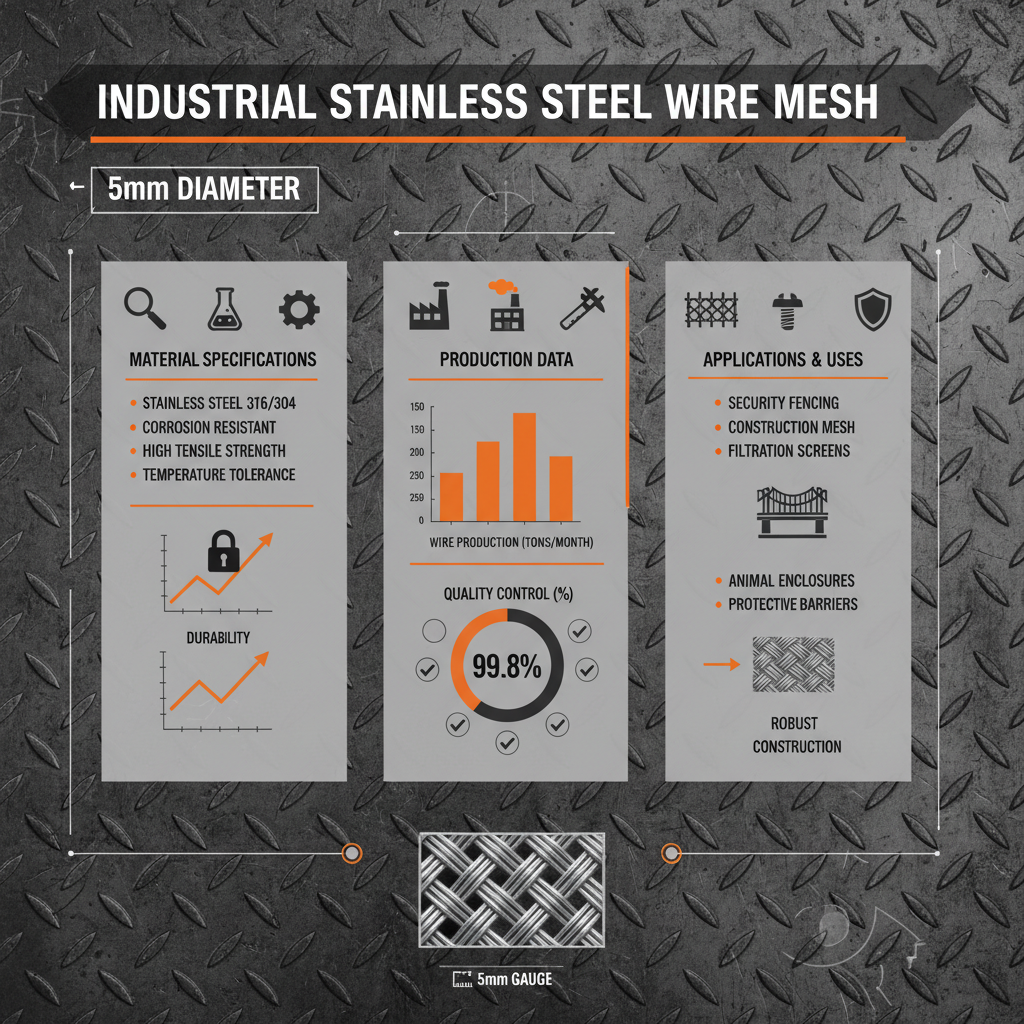
The first critical factor is Corrosion Resistance. Since stainless steel is alloyed with chromium, it forms a passive layer of chromium oxide that protects the mesh from rust. For those using stainless steel woven wire mesh in marine or acidic environments, the addition of molybdenum (as seen in Grade 316) is essential to prevent pitting and crevice corrosion.
Dimensional Stability is equally paramount. The precision of the weave determines the consistency of the filtration rating. High-quality stainless steel woven wire mesh must maintain its aperture size even under significant mechanical load or thermal expansion, ensuring that the "cut-off" point for particles remains constant throughout the product's lifecycle.
Finally, Tensile Strength and Durability define the longevity of the installation. The weaving process introduces a level of structural integrity that allows the mesh to absorb impacts without tearing. This makes it the preferred choice for heavy-duty industrial guards and security fencing where both visibility and impenetrable strength are required simultaneously.
Comparative Analysis of Weave Efficiency
Choosing the right weave for stainless steel woven wire mesh depends on the balance between flow rate and filtration accuracy. Plain weave is the most common, offering a balanced performance, while twill weaves provide higher loading capacities and easier cleaning due to their shifted weave pattern.
When analyzing performance, we look at the "open area" versus the "mechanical stability." A higher open area allows for faster throughput but may compromise the mesh's ability to withstand high-pressure bursts. The following data illustrates how different weave methods perform across key industrial metrics.
Performance Metrics by Mesh Weave Type
Global Applications and Strategic Use Cases
The versatility of stainless steel woven wire mesh allows it to be deployed in diverse environments. In the pharmaceutical industry, it is used for the precise sifting of powdered medications, where zero contamination is a mandatory requirement. In the energy sector, these meshes are often used in catalyst support grids for refineries, enduring high-pressure gases and extreme temperatures.
Beyond heavy industry, we see significant use in architectural design and urban infrastructure. In many European and Asian cities, stainless steel mesh is used as a "green wall" support or as a solar shade, blending aesthetic elegance with structural durability. Even in post-disaster relief, stainless steel mesh is employed in temporary water filtration kits to ensure that displaced populations have access to basic sediment-free water.
Long-Term Value and Sustainability Benefits
The primary long-term value of investing in high-quality stainless steel woven wire mesh is the drastic reduction in replacement cycles. Unlike plastic or galvanized alternatives, stainless steel does not degrade under UV exposure or peel over time. This reliability translates directly into lower operational costs and a smaller carbon footprint, as fewer materials are consumed over the facility's lifespan.
From an emotional and psychological standpoint, the use of robust stainless steel provides "peace of mind" for plant managers and safety officers. Knowing that a filtration barrier will not rupture under pressure or fail due to oxidation ensures a safer working environment for employees. This trust in material science allows for bolder innovation in process engineering.
Furthermore, stainless steel is 100% recyclable. At the end of its useful life, stainless steel woven wire mesh can be melted down and repurposed without losing its inherent properties. This aligns perfectly with the global shift toward a circular economy, making it a responsible choice for companies pursuing ESG (Environmental, Social, and Governance) goals.
Future Innovations in Wire Mesh Technology
The future of stainless steel woven wire mesh is being shaped by nanotechnology and additive manufacturing. We are seeing the emergence of "functionalized" meshes, where the stainless steel surface is coated with nano-particles to create antimicrobial or super-hydrophobic properties. These innovations will allow meshes to not only filter particles but also actively repel oils or kill bacteria on contact.
Digital transformation is also playing a role through the implementation of AI-driven quality control. High-resolution optical sensors can now detect a single broken wire or a micron-level deviation in weave density during production. This ensures that every roll of stainless steel woven wire mesh meets exact specifications, eliminating the guesswork in critical aerospace or medical applications.
Moreover, the push toward green energy is driving the development of specialized meshes for hydrogen fuel cells and carbon capture systems. These applications require extreme precision and chemical inertness, pushing the boundaries of what can be achieved with traditional weaving techniques and paving the way for a new era of high-efficiency environmental technology.
Core Specifications and Performance Analysis of Modern Woven Mesh
| Material Grade |
Corrosion Resistance |
Typical Application |
Lifespan Rating (1-10) |
| SS 304 |
Moderate |
General Industrial Screening |
7 |
| SS 316 |
High |
Marine & Chemical Processing |
9 |
| SS 316L |
Very High |
Pharmaceutical Grade Filters |
10 |
| Duplex 2205 |
Extreme |
Oil & Gas Extraction |
10 |
| SS 430 |
Low/Medium |
Decorative/Interior Use |
5 |
| Hastelloy |
Superior |
Highly Corrosive Acid Filters |
10 |
FAQS
The primary difference is the addition of molybdenum in SS 316, which significantly enhances its resistance to chlorides and marine environments. While SS 304 is excellent for general purpose and indoor industrial use, SS 316 is recommended for chemical plants, seaside installations, or pharmaceutical applications where superior corrosion resistance is mandatory to prevent pitting.
Mesh count refers to the number of openings per linear inch. To determine the correct count, you must identify the smallest particle size you need to block. For example, a higher mesh count (e.g., 100 mesh) results in smaller apertures for fine filtration, whereas a lower count (e.g., 10 mesh) is used for coarse screening. Consulting a micron chart is the best way to align mesh count with particle size.
Yes, one of the greatest advantages of stainless steel mesh is its durability and ability to be cleaned. Depending on the application, it can be cleaned via back-flushing, ultrasonic cleaning, or using industrial solvents. Because the material is resistant to most chemicals and high heat, it can be sterilized or degreased without damaging the structural integrity of the weave.
It depends on the application. Welded mesh is generally more rigid and better for structural support where flexibility is unwanted. However, woven mesh is superior in terms of fatigue resistance and the ability to create extremely fine apertures. For filtration and screening, woven mesh is far superior because it allows for precision and flexibility that welding cannot achieve.
In a plain weave, wires cross over and under each other in a 1:1 ratio, creating a square opening. A Dutch weave uses wires of different diameters for the warp and weft, creating a more densely packed structure. This results in a mesh that is much more effective for high-pressure filtration and finer particle capture while maintaining higher structural strength.
Lead times vary based on the complexity of the weave and the grade of steel. Standard sizes are often in stock, but custom micron-level weaves or exotic alloys may take 2-4 weeks for production. We recommend specifying the wire diameter, mesh count, and total dimensions early in the procurement process to ensure timely delivery.
Conclusion
In summary, stainless steel woven wire mesh is far more than a simple industrial screen; it is a precision-engineered tool that ensures safety, purity, and efficiency across a multitude of sectors. From its core strengths in corrosion resistance and dimensional stability to its role in sustainable, recyclable infrastructure, the right choice of mesh can fundamentally optimize the operational lifecycle of any industrial process.
As we move toward an era of smarter manufacturing and greener energy, the evolution of wire mesh technology—integrating nanotechnology and AI quality control—will continue to push the boundaries of what is possible. We encourage engineers and procurement specialists to prioritize material grade and weave precision to future-proof their operations. For high-quality, precision-engineered solutions, visit our website: www.lanyewiremesh.com