Securing a perimeter requires more than just a physical barrier; it requires a strategic balance between deterrent strength and procurement costs. For facility managers and security contractors, understanding the volatility of the razor wire price per kg is critical for accurate project budgeting and long-term maintenance planning.
The pricing of security wire is not a static figure but a reflection of global steel indices, coating technologies, and manufacturing precision. Whether utilizing galvanized steel or PVC-coated variants, the cost per kilogram is influenced by the raw material grade—such as low carbon steel—and the specific tensile requirements of the installation site.
This analysis explores the underlying drivers of razor wire valuation, providing a framework for buyers to evaluate quality against cost and identify the technical markers of a durable security investment.


The valuation of razor wire is primarily anchored to the cost of raw low-carbon steel. Fluctuations in the steel market directly impact the base price, but the transition from raw wire rod to finished razor coil involves several value-added steps. Cold drawing, for instance, increases the tensile strength of the wire, making it harder to cut and more resistant to deformation, which adds to the processing cost.
Furthermore, the scale of production plays a significant role. Large-scale manufacturers, such as Dingzhou Lanye Metal Products Co., Ltd., leverage integrated production lines to optimize material usage and reduce waste, allowing them to offer competitive mid-range pricing without compromising the structural integrity of the security barrier.
Price variance in security wire often stems from the core wire diameter and the geometry of the razor blade. A thicker core wire provides superior stability and resists sagging over long spans, but it increases the overall weight per roll, thereby raising the total cost. Buyers must balance the need for structural rigidity with the available budget.
The blade profile—whether it is a BTO (Barbed Tape Obstacle) or a Concertina coil—also dictates the amount of material required. Complex blade shapes increase the surface area and the amount of coating needed to protect the edges from corrosion, adding a marginal but cumulative cost to the per-kilogram price.
Precision in the drawing process is another hidden cost driver. Inconsistent diameters can lead to weak points in the fence, making it susceptible to breach. High-quality production requires strict adherence to material certifications, ensuring that the steel grade maintains consistent elongation and bendability.
Raw steel is highly susceptible to oxidation, especially in coastal or humid environments. To prevent premature failure, various coating technologies are applied, each affecting the final price point. Hot-dipped galvanizing provides a thick layer of zinc, offering the highest level of protection against rust.
The choice of coating transforms a security product from a short-term deterrent into a long-term asset; while PVC coating increases the initial price per kg, it significantly reduces the frequency of replacement in corrosive environments.
Electric galvanizing is often used for indoor or low-humidity settings as a more cost-effective alternative, though it offers less protection than the hot-dipped process. For those requiring both aesthetics and extreme durability, PVC coating over a galvanized core is the gold standard, providing a double layer of protection.
When analyzing the razor wire price per kg, it is helpful to look at a relative index of cost drivers. Raw material represents the largest share, but the "processing premium"—the cost added by drawing, shaping, and coating—varies based on the desired specification.
The following index illustrates the relative impact of different factors on the final per-kilogram price, where a higher value indicates a greater influence on the total cost.
The ideal razor wire selection depends entirely on the risk profile of the site. In a typical industrial setting, such as a warehouse perimeter, hot-dipped galvanized wire often provides the best ROI, offering high deterrence and sufficient weather resistance without the added cost of PVC.
Conversely, for high-security government installations or sites in salt-spray environments, the higher price per kg of PVC-coated razor wire is justified by the prevention of corrosion-induced structural failure. In these cases, the focus shifts from the initial purchase price to the total cost of ownership over a ten-year lifecycle.
The industry is moving toward "hybrid" security systems, where physical barriers like razor wire are integrated with electronic sensors. This shift changes how buyers view the cost of the wire; it is no longer the sole line of defense but a physical deterrent that slows down intruders to allow electronic systems to trigger alarms.
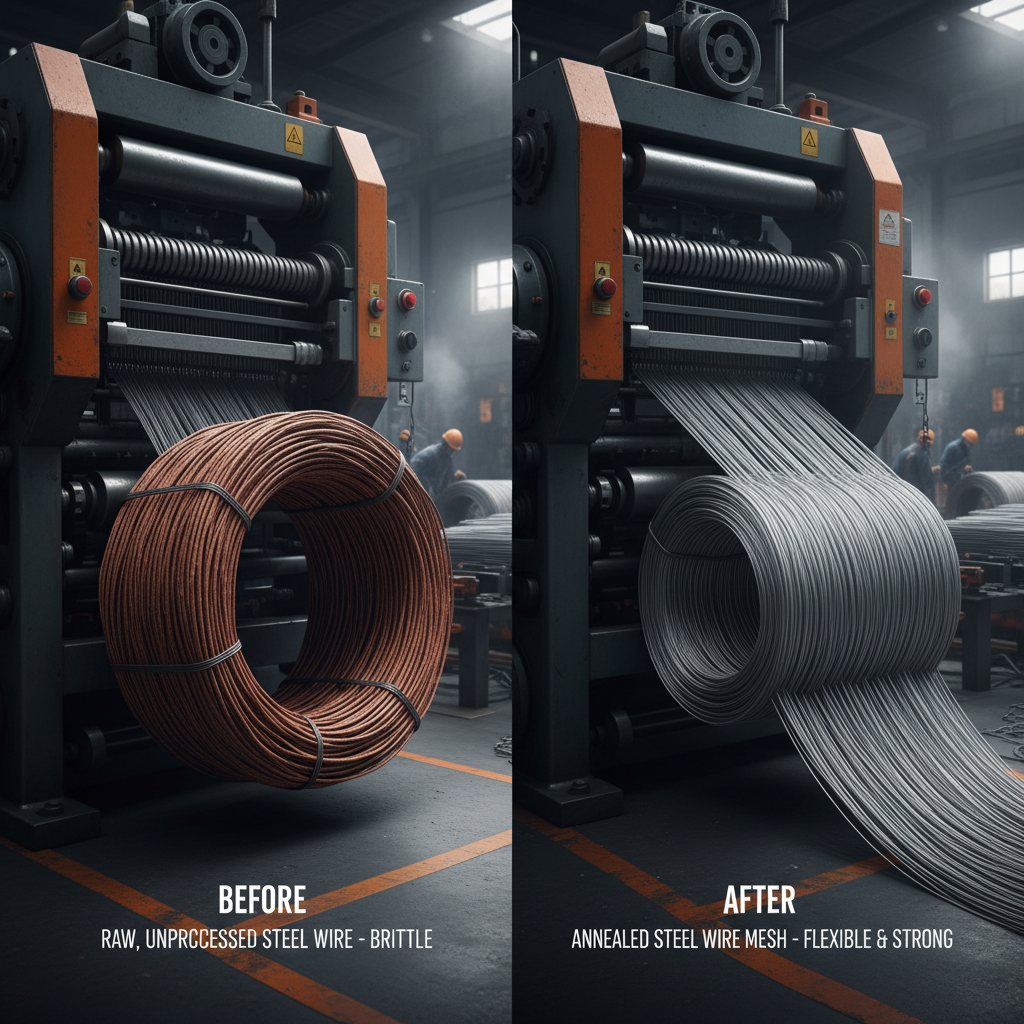
There is also an increasing demand for sustainability in manufacturing. Suppliers are exploring more efficient annealing and drawing processes to reduce energy consumption, which may eventually stabilize the pricing of steel products by lowering operational overheads.
Furthermore, the rise of e-commerce and global logistics has made it easier for buyers to source materials directly from manufacturers. This transparency puts pressure on distributors and allows for more competitive pricing based on direct factory output and volume-based discounts.
To avoid the trap of choosing the lowest price per kg, buyers should use a multi-dimensional evaluation matrix. A low price often indicates a thinner zinc coating or lower-grade steel, which leads to rapid degradation and security vulnerabilities.
The key is to assess the "utility value" of the product—the relationship between the cost and the expected lifespan of the barrier. This involves verifying material certifications, such as Q195 steel standards, and requesting samples to test the ductility and coating adhesion.
The following table provides a conceptual framework for comparing different razor wire specifications based on environmental needs and budget constraints.
| Coating Type | Environmental Suitability | Relative Price Index | Expected Lifespan |
|---|---|---|---|
| Electric Galvanized | Low Humidity / Indoor | Low | 3-5 Years |
| Hot-Dipped Galv. | General Outdoor | Medium | 10-15 Years |
| PVC Coated | High Corrosion / Coastal | High | 15-20 Years |
| Black Annealed | Temporary / Industrial | Very Low | 1-2 Years |
| Hybrid Coated | Extreme Industrial | Very High | 20+ Years |
| Standard Steel | Dry Arid Regions | Low | 5-8 Years |
The primary driver is the global price of low-carbon steel wire rod. However, secondary drivers include the cost of zinc for galvanizing, the price of PVC polymers for coating, and the energy costs associated with high-temperature annealing and cold drawing. Manufacturing efficiency and the volume of the order also significantly influence the final per-kilogram quote provided by the supplier.
Hot-dipped galvanizing is generally more expensive per kg because it involves immersing the wire in molten zinc, creating a thicker, more durable layer. Electric galvanizing uses an electrolytic process that is faster and uses less zinc, resulting in a lower price but significantly reduced corrosion resistance. For outdoor security, the higher cost of hot-dipped galvanizing is usually a necessary investment.
Not always. If the installation is in a dry, inland environment, hot-dipped galvanized wire is sufficient. However, in coastal areas with high salt content in the air or industrial zones with chemical pollutants, PVC coating is essential. It prevents the underlying steel from oxidizing, meaning you spend more upfront but save on the massive labor and material costs of replacing a rusted fence every few years.
Request the Material Test Certificate (MTC) to ensure the raw material is a recognized grade, such as Q195. You should also check the coating thickness using a magnetic gauge and perform a simple bend test to ensure the wire doesn't crack. A price that is significantly below market average often indicates "under-weighting," where the wire diameter is thinner than specified.
Steel manufacturing is a volume-driven business. Ordering in bulk allows the factory to run production lines continuously, reducing setup time and waste. Most manufacturers have a Minimum Order Quantity (MOQ) to ensure viability. Large wholesale orders typically receive a discounted rate per kg compared to small, custom-cut orders, which require more manual handling and packaging.
Yes, to an extent. The process of shearing and forming the steel strip into razor blades requires specific tooling and precision. More complex or aggressive blade profiles may increase the scrap rate during production. While the weight of the steel remains the primary cost, the manufacturing complexity of high-security profiles adds a processing premium to the final price.
Evaluating the razor wire price per kg should never be a race to the bottom. The cheapest material often becomes the most expensive when factoring in premature corrosion, structural failure, and the labor costs of replacement. A strategic approach involves matching the coating technology and steel grade to the specific environmental stressors of the site.
By focusing on the total cost of ownership and verifying technical specifications like Q195 certification and coating thickness, buyers can ensure their security investment provides lasting deterrence. In the realm of perimeter protection, quality is the only true guarantee of reliability.

Contact Us Now. 100% Customer Satisfaction Guaranteed
Newsletter